



The institute's main areas of research include both European and non-European religious history (with a focus on Asia) as well as theoretical aspects of the field of religious studies (with an emphasis on the sociology of religion, gender issues, and the relationship between religion and the media).
FWF project "Gender and the Bible"
Nicole Bauer is principal investigator in the FWF funded research project "Gender and the Bible", an empirical study of Roman Catholic and Evangelical groups in Austria. For more information see the project homepage.


International Graduate School "Resonant Self-World Relations in Ancient and Modern Socio-Religious Practices"
Franz Winter is "member of faculty" of the International Graduate School "Resonant Self-World Relations in Ancient and Modern Socio-Religious Practices", which is administered both at the Max Weber Kolleg/University of Erfurt and the University of Graz. He is currently supervising seven dissertations on the basis of a cotutelle agreement with the University of Erfurt.
Traditionalist East Asia
Franz Winter, together with Lukas Pokorny of the University of Vienna, leads the research project “Traditionalist East Asia,” which examines the reception of East Asia within specific currents of Western esotericism. As part of the project, Dr. Marleen Thaler is employed at the institute.
Traditionalism is a decidedly anti-modernist movement that falls within the alternative religious spectrum and traces its origins primarily to the teachings of the French thinker René Guénon (1886–1951). In its fundamental conception, traditionalism is particularly committed to the idea of so-called “perennialism,” that is, the assumption of a universal truth permeating all major religions, which must be uncovered. Traditionalists draw primarily on Asian religions and their concepts—such as Islamic Sufism, Indian Vedanta, but also East Asian religions like Japanese Zen Buddhism, Shinto, or Chinese Daoism—and selectively incorporate these into their own intellectual framework in an Orientalist manner. Although the most important figures of traditionalism have long since passed away, their ideas and works continue to exert a significant influence to this day. The teachings of the Italian thinker Julius Evola (1898–1974), for example, serve as important sources of inspiration for the alt-right movement and its various esoteric and neopagan manifestations. Evola’s interpretation of Zen Buddhism plays a role here that should not be underestimated. Furthermore, traditionalist interpretations of (East) Asian religions continue to shape their general perception to this day.
This project takes up this point and aims to explore how leading thinkers of traditionalism engage with East Asian religions and their concepts, and how these continue to live on to the present day in various—and at times highly contentious—religious and political discourses.
Titled “Inventing Perennial Japan,” Marleen Thaler’s project examines traditionalist influences on U.S. countercultural constructions of Japan. Specifically, the project examines how Japan and Japanese concepts (e.g., Zen, martial arts, macrobiotics) were not only understood as “countercultural exoticism” in the U.S. context but were also framed by traditionalist and perennialist currents.

Governance Processes of Religious Diversity in Post-Socialist Southeast Europe
Evelyn Reuter leads the FWF research project “Governance Processes of Religious Diversity in Post-Socialist Southeast Europe,” in which she examines the role of religious minorities in interreligious dialogue in Albania.
Project duration:
2026–2028
The research project examines the role of religious minorities in interreligious dialogue in Albania, defining minorities qualitatively as groups that have fewer privileges or less visibility compared to other religious communities. The focus is on how various groups—such as the Catholic Church, Sufi orders, and the Bahá’í community—participate in interreligious dialogue, whether they are included or excluded, and to what extent they are able to represent themselves.
The project fosters a better understanding of how religious diversity is experienced in Albania and the significance of interreligious dialogue for coexistence in a changing society. It also provides contemporary insights into Albania’s religious-political landscape, where religious diversity is a distinctive social feature following the country’s atheistic socialist past.
A key focus is on analyzing interreligious dialogue as a form of governance of religious diversity—that is, as processes through which the coexistence and visibility of different religious communities are shaped and negotiated. The findings are intended to help strengthen cooperation among religious communities, give religious minorities greater visibility and a voice, and break down prejudices.
Project partners (national and international):
- Karsten Lehmann (Vienna-Krems University of Teacher Education, KPH), Research Professor of Interreligious Studies, Spokesperson for the “Religion and Politics” Working Group (AK RelPol) of the German Association for the Study of Religion (DVRW)
- Cecilie Endresen (University of Oslo), Professor of Religious Studies, member of the multidisciplinary research initiative Religion and Politics (RelPol) in Oslo
- István Keul (University of Bergen), Professor at the Department of Archaeology, History, Cultural Studies, and Religion, member of the Minority Studies research group in Bergen
https://www.fwf.ac.at/en/research-radar/10.55776/ESP3544224
Individual research
Contemporary religiosity, Catholicism in contemporary society, exorcism and possession in contemporary society, Judaism and Kabbalah in the past and present, religion and medicine, religion and psychotherapy, new religious movements, economics of religion, religion and gender, social science methods in religious research.
Her research focuses on European religious history (late antiquity/the Middle Ages), representations of religion in film and TV, and the relationships between the body, gender and religion.
History of contact between Europe and Asia from antiquity to the present, history of religion in South, East and West Asia, new religious movements in East and West, esoteric research, religion and media.
Religion in contemporary Southeast Europe, especially Albania and (North) Macedonia; religious, ethnic, and cultural diversity (dialogue, contacts, minorities, migration); religious economy and politics (religious cultural assets, governance, management, transformation processes); religious spaces.
Global religious history, transformation of religion, alternative religious currents of modernity, religious traditionalism, the modern history of yoga, religion and technology, eco-spirituality
Further recent publications
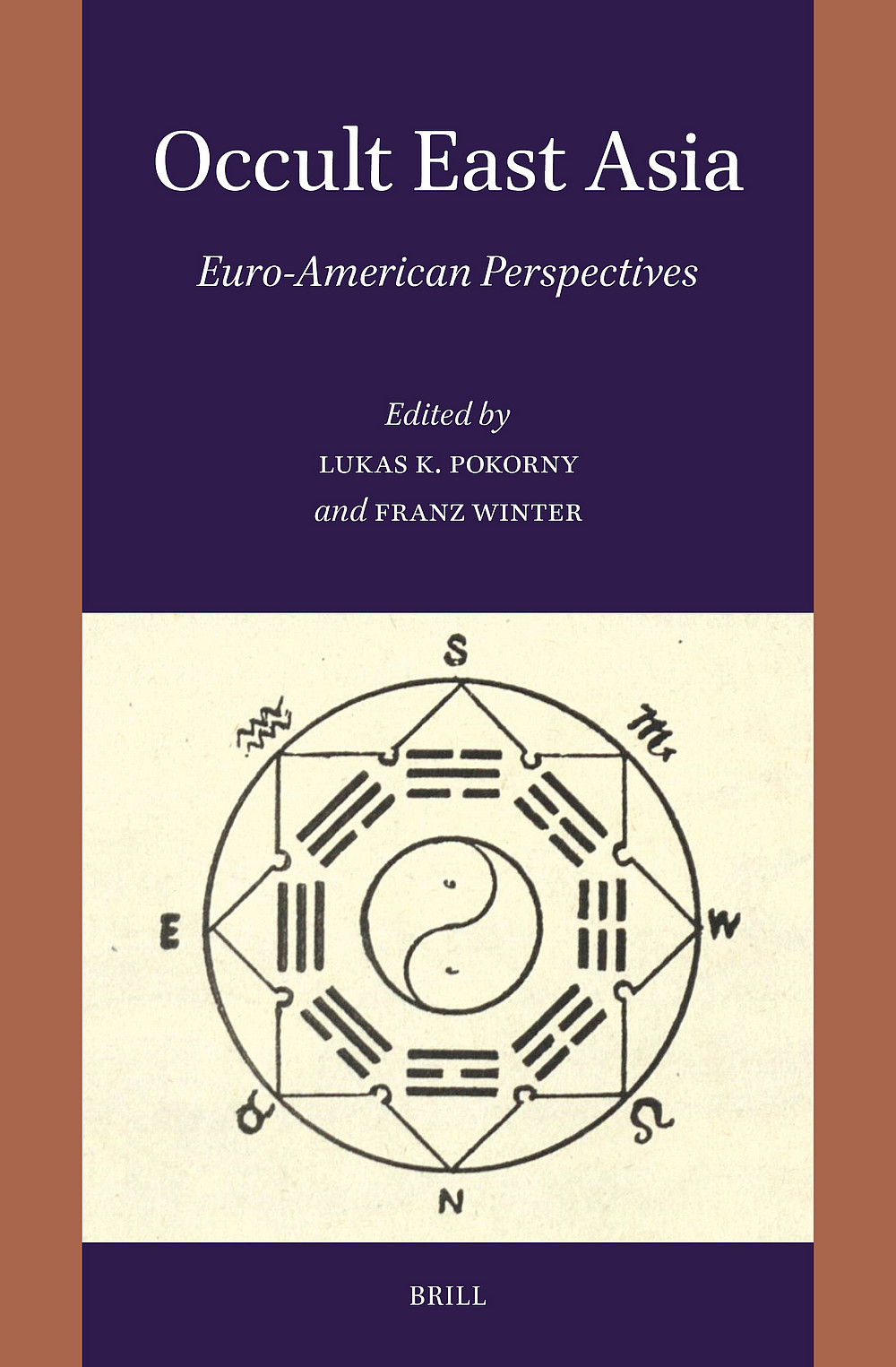
Together with Lukas Pokorny, Franz Winter has published a special issue of the renowned journal NUMEN. Journal for the History of Religions entitled "Euro-American Esoteric Readings of East Asia", which deals with aspects of the reception of China in modern Europe.
The issue is already available online. The article by Franz Winter deals with the reception of China by an important French occultist of the late 19th century.
Media industry is a vibrant element of East Asian popular culture that has become increasingly important on a global level in the last decades. Japanese, and recently South Korean and Chinese films or TV series have a growing and worldwide audience not least because of easier access through streaming services. The many film productions provide a multifaceted arena of highly diverse content that spans nearly all aspects of the cultural developments in the countries. Religion has always played a major role in these contexts in various ways and in accordance with the highly diversified religious landscape of East Asia. Consequently, this issue brings together contributions on Japanese, Chinese and Korean films, including one additional glimpse to South Asia, presenting portrayals of independent filmmakers, highly renowned classics, but also examples of manga and anime, the cyberpunk genre, or on most recent highly successful streaming series. The admittedly small sample we can provide is intended to pique curiosity and encourage readers to delve more deeply into the multifaceted and intriguing relationship between religion and media in Asia. If the presented contributions inspire academic discussions and further research, then this issue will have served its purpose.
Information about the work can be found here.